Usage in Flow
During fetch_context, similar records are retrieved and injected into analyze/generate/review stages.
AGENA is an agentic AI platform powered by pixel agent technology. It runs an autonomous PM → Dev → Reviewer pipeline that writes production code, reviews quality, and opens GitHub PRs with full task telemetry.
npm install -g @agenaai/cliAll integrations are unified in one panel and events flow end-to-end automatically.

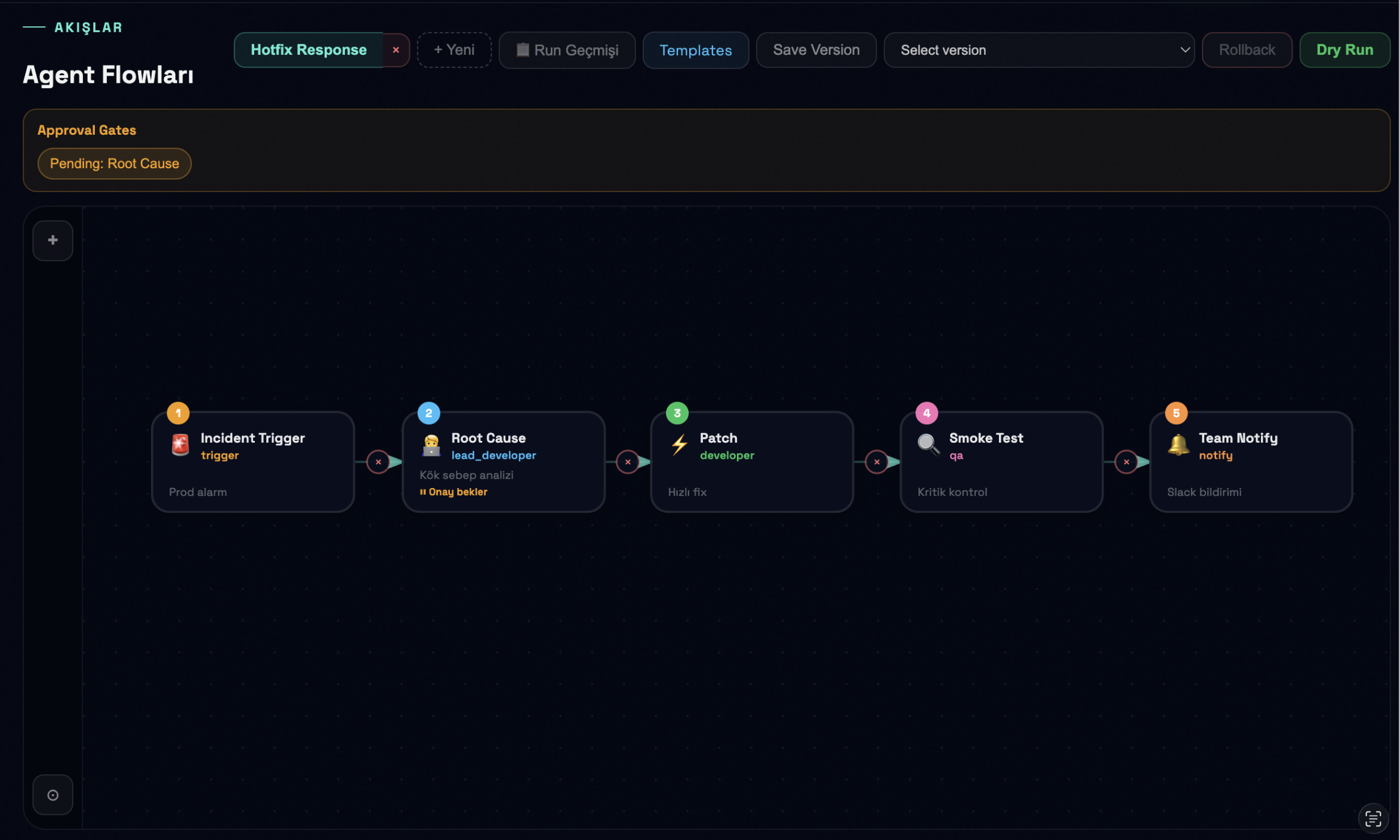
This visual shows how task stages move through the agent pipeline. Each step runs with live logs and control layers.
During flow execution, the system retrieves similar tasks from Qdrant vector DB to strengthen prompt context. This drives more consistent, faster, and more accurate code generation inside the same repo scope.
During fetch_context, similar records are retrieved and injected into analyze/generate/review stages.
Primary fields stored in Qdrant payload:
keyTask tracking key for traceability.organization_idUsed as tenant isolation filter during retrieval.inputSnapshot of task title + effective description.outputSnapshot of finalized generated code output.Content types currently matched through memory:
The LLM pulls your team's closed work items (final SP + assignee + PR titles + branches) from a vector index and anchors every new estimate on the closest matches — by name. No generic estimates, your velocity and your patterns.
One click pulls every closed, SP-assigned item from Azure DevOps / Jira into Qdrant. Each is embedded with title + description + branch names + PR titles.
The new item is queried as a vector; hits below cosine 0.55 are dropped. Top-5 survivors are returned, with same-type items (Bug/Story/Task) preferred when possible.
Each hit goes into the LLM prompt with its SP badge, similarity %, previous assignee and linked PR titles. The model reasons "closest is #X, Ali did it at 3 SP."
SP badge + confidence + rationale naming the prior items it's based on + a paste-ready comment. One click writes it back to Azure / Jira.
Every completed task turns into a reusable skill: approach, prompt fragment, touched files, tags — all in a vector index. When a new task arrives, the closest skills are prepended to the agent's system prompt. Your team never discovers the same solution twice.
Agent writes code, opens the PR, task marks completed. A fire-and-forget job kicks the Skill Librarian.
OpenAI / Claude CLI / Codex CLI summarises title + description + reviewed code into { name, approach_summary, prompt_fragment, tags }. Skipped when confidence < 50 so too-unique tasks don't pollute the catalog.
Upsert with kind='skill' payload, org-scoped, distinct from refinement history. A DB row is created too, powering the catalog UI with usage counters.
Before the agent runs, top-3 skills above the relevance threshold are retrieved and prepended to the system prompt as a RELEVANT TEAM SKILLS block. Works in Claude CLI, Codex CLI, classic pipeline — all four modes.
#61981 — Color variant link routes to wrong product. Senior dev fixes it by adding a fallback in ColorVariantResolver and tightening the slug regex.
name: Color-variant routing fallback · tags: routing, slug, e-commerce · approach: route through ColorVariantResolver, never inline the slug parse.
#64044 — Category filter loses variant on pagination. Top skill match (81%) is the routing fallback above. Its prompt fragment is injected: agent skips inline slug parse, reuses the resolver, ships a fix consistent with the team's precedent.
Your laptop, your teammate's machine, a cloud daemon — each registers as a Runtime. Token-based enrollment, 30s heartbeat, live status. Assign a task to a specific runtime (routing ships next).
bridge-server.mjs reads AGENA_JWT + AGENA_TENANT_SLUG. Absent → prior behaviour. Present → proceeds to enrollment.
POST /runtimes/register with name, platform, discovered CLIs (claude/codex). Backend mints a one-shot token, stores only a sha-256 hash, bridge persists to ~/.agena/runtime.json.
Heartbeat every 30s with X-Runtime-Token, refreshing CLI list + daemon version. UI polls every 10s; status dot (green/grey/red) is live.
GET /runtimes/{id}/tasks/next is already stubbed. Daemons will poll it for work; you'll be able to pin a task to a specific runtime from the UI.
Every blocked Azure / Jira ticket in the sprint gets a Ping button. Agena reads the thread, checks the last reply, and if it's been silent for 24h, an LLM drafts a short polite status-check — in the target language, signed by Agena — and posts it back with an @mention. 48h cooldown + DB-persisted history, so nobody ever gets pinged twice.
Fetches the comment thread from Azure DevOps or Jira and measures hours-since-last-activity. Anything <24h old is skipped — no noise.
Pick the LLM at send time: Claude CLI + sonnet (via the host bridge), Codex CLI, OpenAI, Gemini, or HAL. Claude failures auto-fall-back to Codex on the same bridge.
Message is generated in the chosen language (7 locales), wrapped with <at>@Display Name</at> so Azure renders a real mention, and signed "written by Agena via {model}" for full transparency.
Every successful nudge is stored in nudge_history. The UI badges already-pinged items with "Agena pinged Xh ago" and a 48h cooldown blocks accidental spam.
Install once (brew or npm), log in with device-code OAuth, and get every dashboard workflow — tasks, skills, sprint refinement, runtimes — as a single-binary command. JWT held in the OS keychain; no copy-paste.
agena login opens a browser for RFC 8628 device-code, stores the JWT in macOS Keychain / libsecret / Windows Credential Manager. Switch orgs with agena org switch <slug>.
agena task create -t "Fix login" --assign enqueues for the AI agent; task list / show / logs give you the full trail without opening the dashboard.
agena skill search "nullable pointer" vector-matches the team's auto-extracted patterns; list / show / delete round out the catalog.
agena refinement backfill indexes your Azure/Jira history into Qdrant. agena refinement analyze gives grounded SP estimates before the planning call.
$ brew install aozyildirim/tap/agena
$ agena setup # device-code OAuth + enrolls this machine
$ agena task list
$ agena skill search "nullable pointer panic"
$ agena refinement analyze -p MyProject -t MyTeamJWT auth, org-level isolation, usage limits, and billing controls baked in from day one.
Pixel agent architecture with LangGraph state machine providing full observability across each AI stage of your pipeline.
Branch, commit, and PR generation with traceable task links and review summaries.
Prompt caching, model routing, and token/cost tracking per organization.
One task, multiple repos — AGENA runs parallel agent pipelines and creates separate PRs for each repository.
One-click tokenised links carry the description, comments and screenshots. Recipients import into their own org with a single button — WhatsApp, Teams and Slack share targets included.
Two of AGENA's flagship automations live here: stale-ticket triage that scans Jira & Azure DevOps directly at the source, and a review-backlog killer that nudges humans before code rots. Both are fully org-scoped, multi-channel, and AI-powered — no env keys, no mock outputs, just the agent your team configured.
Correlates PR merges, deploys, Sentry / NewRelic / Datadog / AppDynamics errors and Jira / Azure DevOps work items into confidence-scored clusters. One timeline, one narrative, one click to rollback.
Scans Jira (search/jql) + Azure DevOps WIQL across every project, asks your reviewer agent (Claude / Codex / OpenAI) for a verdict on each idle ticket, and lets you bulk-resolve in one modal. Cancelled / Won't Fix excluded by default; project + state + source filters baked in.
Tracks every open PR's age, posts a polite nudge to Slack DM / WhatsApp / email / Telegram / the PR comment thread itself — in 7 languages, optionally AI-generated by your reviewer agent reading the actual diff. Built-in 24h floor, deletion detection, and per-row cooldown so nobody gets spammed.
Big eng orgs split into Backend / Mobile / Payments — each scope gets its own tasks, repos, AI agents and 6-character invite code.
Assign a single task to multiple repositories simultaneously. Each repo gets its own AI pipeline execution and pull request.
Define execution order between tasks. When a dependency completes, the next task in the chain starts automatically — no manual intervention needed.
Pull work from Jira/Azure or create directly in the dashboard. AI parses intent and context.
PM, Dev, and Reviewer agents collaborate through LangGraph states with full telemetry.
Reviewed output becomes a GitHub PR with timeline, logs, and quality scores.
Track queued, running, and completed tasks with per-task AI timeline and cost breakdown.
One click "Assign to AI" with Azure/Jira import actions inside the dashboard.
Track flow orchestration and role-based agent behavior in a single view.
Make AI delivery safer, governed, and predictable with dependency graph, PR risk scoring, and tenant playbook controls.
Connect tasks, surface blockers, and automatically prevent assignment before prerequisite work is completed.
Generate a live risk score per task using file churn, critical-path touches, and diff scale.
Agents interpret intent more accurately with business context, acceptance criteria, and edge-case notes.
Prevent budget overrun with per-task token/cost limits, then auto-stop or request approval at threshold.
Auto-detect production issues from New Relic APM and Sentry, create fix tasks, and let AI agents resolve them with pull requests — hands-free.
Connect your New Relic account and automatically import error groups from APM entities. Deduplication prevents duplicate tasks.
Extracts file paths, line numbers, and affected endpoints from error messages. Agents know exactly where to fix.
Map New Relic entities to your repositories. When errors are imported, the system knows which codebase to target.
Enable auto-import per entity. The worker polls New Relic every 5 minutes and creates tasks for new errors automatically.
Trigger → New Relic → Condition → Developer → PRTrigger → Sentry → Condition → Developer → PRWith Notification Router, pipeline events, PR outcomes, failure signals, and approval steps are automatically routed to the right channel.
Live streaming, safer code generation, and clearer task visibility are now showcased with animated cards on the landing page.
Task detail now streams logs in real-time via SSE; follow stage updates without refreshing.
Agents now stay aligned with repository stack; absolute-path and stack-drift outputs are filtered at backend level.
Execution progress is computed with stage aliases, reducing false pending states in the UI.
Task duration, token, cost, and run telemetry are now easier to track in the interface.
“AGENA turned our 2-week sprint into a 2-day sprint. The AI agents generate production-ready PRs that actually pass code review.”
“The flow builder is incredible. We automated our entire PR pipeline — from Jira ticket to merged code — with zero manual intervention.”
“As a small team, AGENA is like having 3 extra senior developers. The code quality from the AI review pipeline surprised us.”
“GitHub and Azure DevOps integration works flawlessly. We process 50+ automated PRs per week with AGENA agents.”
“I write task descriptions and AGENA delivers working code. It changed how our entire team thinks about product delivery.”
“The pixel agent visualization makes AI workflows transparent. I can see exactly what each agent is doing in real-time.”
AGENA is an agentic AI platform that autonomously generates code, reviews quality, and creates pull requests. It runs a PM → Developer → Reviewer → Finalizer pipeline powered by pixel agent technology, turning your backlog into production-ready PRs in minutes.
Agentic AI refers to AI systems that can autonomously plan, execute, and adapt to achieve complex goals. Unlike simple AI assistants, agentic AI agents work independently through multi-step workflows — analyzing tasks, generating code, reviewing quality, and shipping features without constant human guidance.
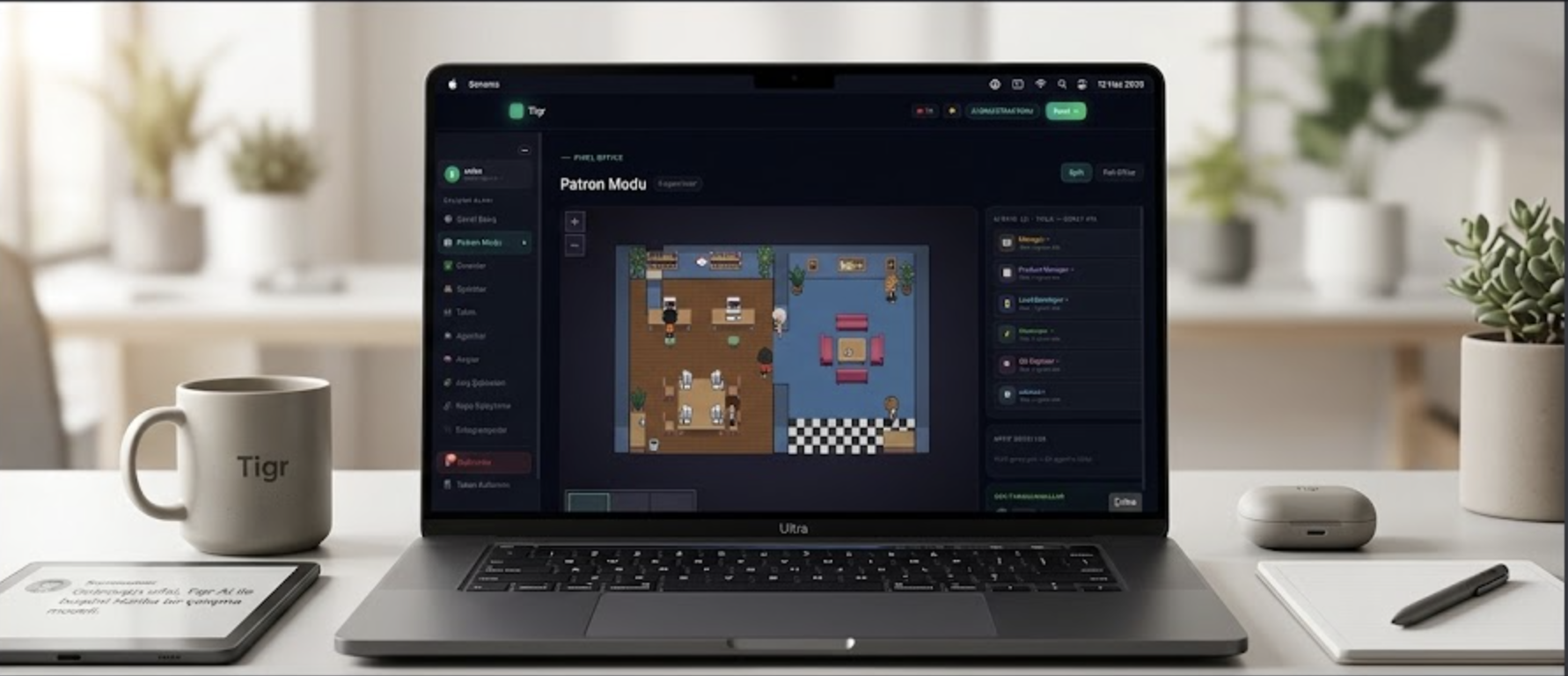
Pixel agent technology is AGENA's visual orchestration layer that represents each AI agent as an interactive pixel character. It provides real-time visibility into your autonomous AI workforce — showing which agents are active, what they're working on, and the progress of each task through the pipeline.
AGENA integrates with GitHub and Azure DevOps for PR automation, Jira for task import, Slack and Microsoft Teams for ChatOps notifications, and supports OpenAI and Google Gemini as LLM providers.
Yes! AGENA offers a free tier with 5 tasks per month, token usage tracking, and community support. The Pro plan ($49/month) includes unlimited tasks, priority worker throughput, team invites, and billing via Stripe or Iyzico.
Yes, AGENA is fully open source under the MIT license. You can self-host it or use the managed platform. The source code is available on GitHub at github.com/aozyildirim/Agena.
Create your workspace and run your first autonomous delivery cycle today.
Launch AGENA - It's Free →